Skin and Hair Changes in Menopause: What's Actually Happening
Drier, thinner skin. Hair that's finer than it used to be, or thinning at the crown. These changes are real, hormonal, and faster than normal ageing alone — here's why, and what genuinely helps.
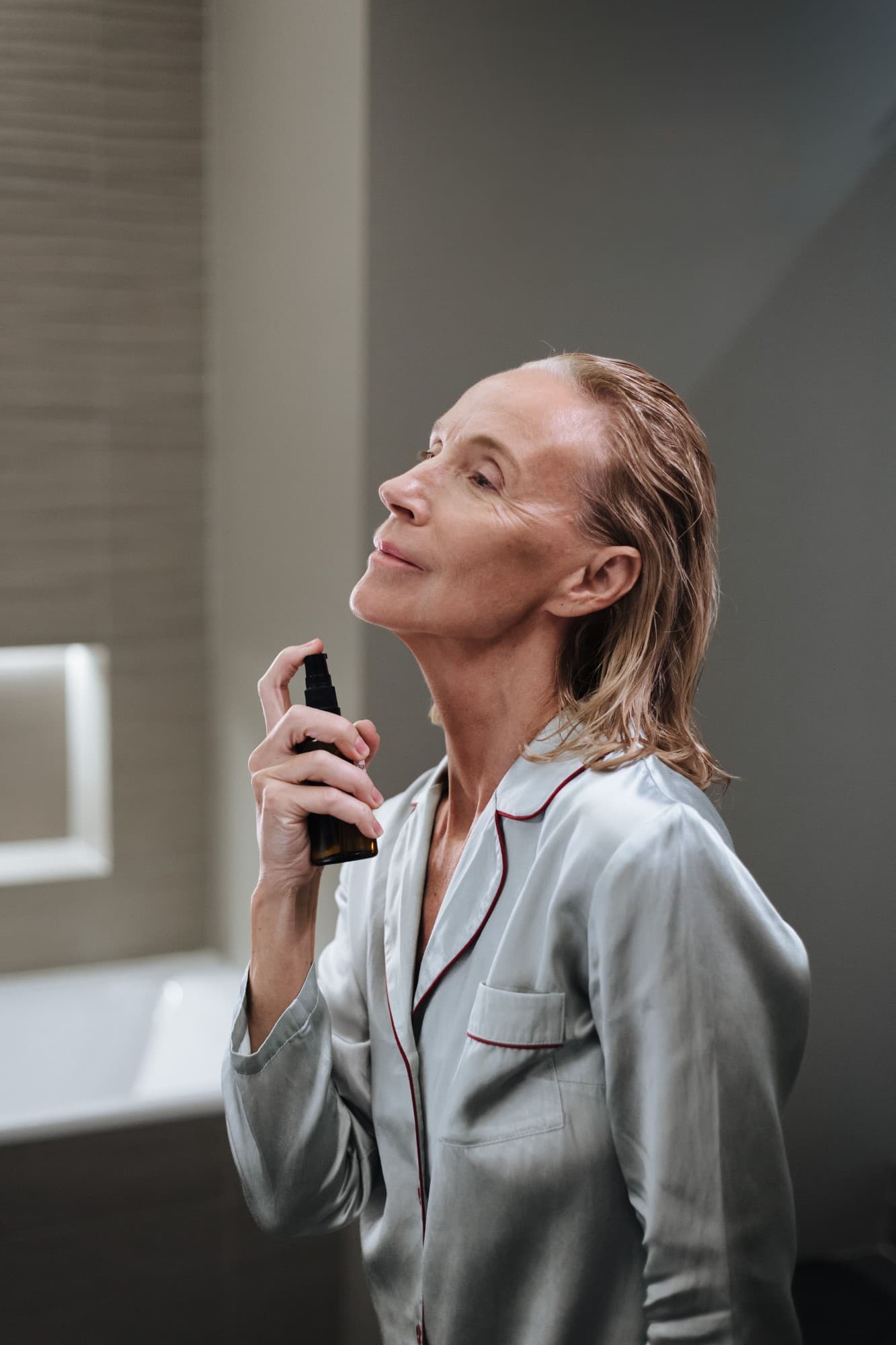
If your skin feels drier and thinner than it used to, or your hair seems finer, or you're noticing more of it left behind after brushing, you're not imagining a difference. Skin and hair changes during menopause are real, hormonally driven, and happen faster than ordinary ageing alone — and like most menopause symptoms, they're rarely explained clearly at the time they start.
Why Does Menopause Change Your Skin?
Oestrogen supports collagen production, skin moisture, thickness, and elasticity, so as oestrogen declines through menopause, skin genuinely loses structure and hydration rather than simply "ageing a bit faster." Oestrogen receptors sit throughout the skin — in the outer layer, the deeper dermis, and hair follicles — which is why the hormonal shift shows up in visible, physical ways.
How Much Collagen Do You Actually Lose?
The change is sharper than most people expect: research shows women lose roughly 30% of their skin's collagen in the first five years after menopause, followed by a slower ongoing decline of around 2% per year for about 15 years after that, according to a peer-reviewed review in the journal Climacteric. That front-loaded drop is a large part of why skin can feel noticeably different within a relatively short window around menopause, rather than changing gradually over decades.
Why Does Skin Get Thinner and Drier?
As collagen and oestrogen both decline, skin becomes thinner, drier, and less elastic, and the epidermis and dermis — the outer and deeper layers of skin — lose some of their structural resilience. Thinner skin also shows underlying blood vessels, pigmentation, and shadows more easily, which is part of why skin tone and texture can look visibly different, not just feel different to the touch.
Why Does Hair Get Thinner During Menopause?
Hair thinning has a slightly different mechanism to skin changes, though the same hormonal shift drives both. Oestrogen and progesterone fall sharply during menopause, but androgens like testosterone — always present in smaller amounts — don't fall by nearly as much, so the ratio between them shifts toward relatively more androgen influence. Over time, this can miniaturise genetically susceptible hair follicles, producing progressively finer, shorter hairs. Separately, oestrogen normally helps keep hair in its active growth phase for longer, so less of it means hair spends more time resting and shedding rather than growing.
Can HRT Help With Skin and Hair Changes?
There's real evidence that it can. Because HRT directly addresses the oestrogen decline driving both sets of changes, some women see a genuine reduction in skin dryness and thinning, and improved hair quality, while on it. It isn't guaranteed for everyone, and it's one option among several worth weighing with a GP rather than the only lever available.
What Actually Helps Day to Day?
Alongside any medical treatment, a few things consistently make a real difference:
- Adequate protein supports the raw material your body needs to maintain what collagen and hair structure it can — this is the same nutrition principle that matters for muscle and bone during menopause.
- Consistent hydration, both from water intake and skin-appropriate moisturisers, helps counter the drier baseline oestrogen decline creates.
- Gentler skincare — fewer harsh actives, more barrier-supporting ingredients — tends to suit thinner, more reactive menopausal skin better than routines built for younger skin.
- Strength training and good sleep support the same broader hormonal and metabolic picture behind weight changes and energy levels during menopause, and skin and hair are downstream of that same system, not separate from it.
Is This Just Something You Have to Accept?
Not entirely. Some of this shift is a genuine, expected part of the hormonal transition and won't fully reverse — but how much it affects you day to day is influenced by nutrition, treatment choices, and overall hormonal health, all of which are things you have real options for. Treating it as a legitimate symptom worth addressing, rather than a cosmetic inevitability to quietly accept, is the more useful frame.
If you'd like to talk through how nutrition and strength training fit into managing menopause symptoms more broadly — skin and hair included — book a 30-minute discovery call with Mettle Fitness.
Frequently Asked Questions
Does menopause really change your skin and hair?
Yes — oestrogen supports collagen production, skin moisture, and hair growth, so its decline through menopause causes real, measurable changes, not just the normal effects of getting older.
How much collagen do you lose during menopause?
Research shows roughly 30% of skin collagen is lost in the first five years after menopause, followed by a slower decline of around 2% per year for about 15 years after that.
Why does hair get thinner during menopause?
As oestrogen and progesterone fall, the relative proportion of androgens (like testosterone) in the body rises, which can miniaturise hair follicles over time and shorten hair's growth phase — the same broad mechanism behind female pattern hair thinning.
Can HRT help with skin and hair changes?
There's evidence HRT can reduce or partly reverse some of these changes, since it addresses the oestrogen decline driving them, though results vary and it's one option among several worth discussing with a GP.
What actually helps skin and hair during menopause day to day?
Adequate protein, staying well hydrated, gentle skincare rather than harsh actives, and treating the same hormonal picture with strength training and good sleep all genuinely help, alongside any medical treatment you choose.
Ready to try a different approach?
Book a 30-minute discovery call with Mettle Fitness. No obligation.
Book Your Discovery Call